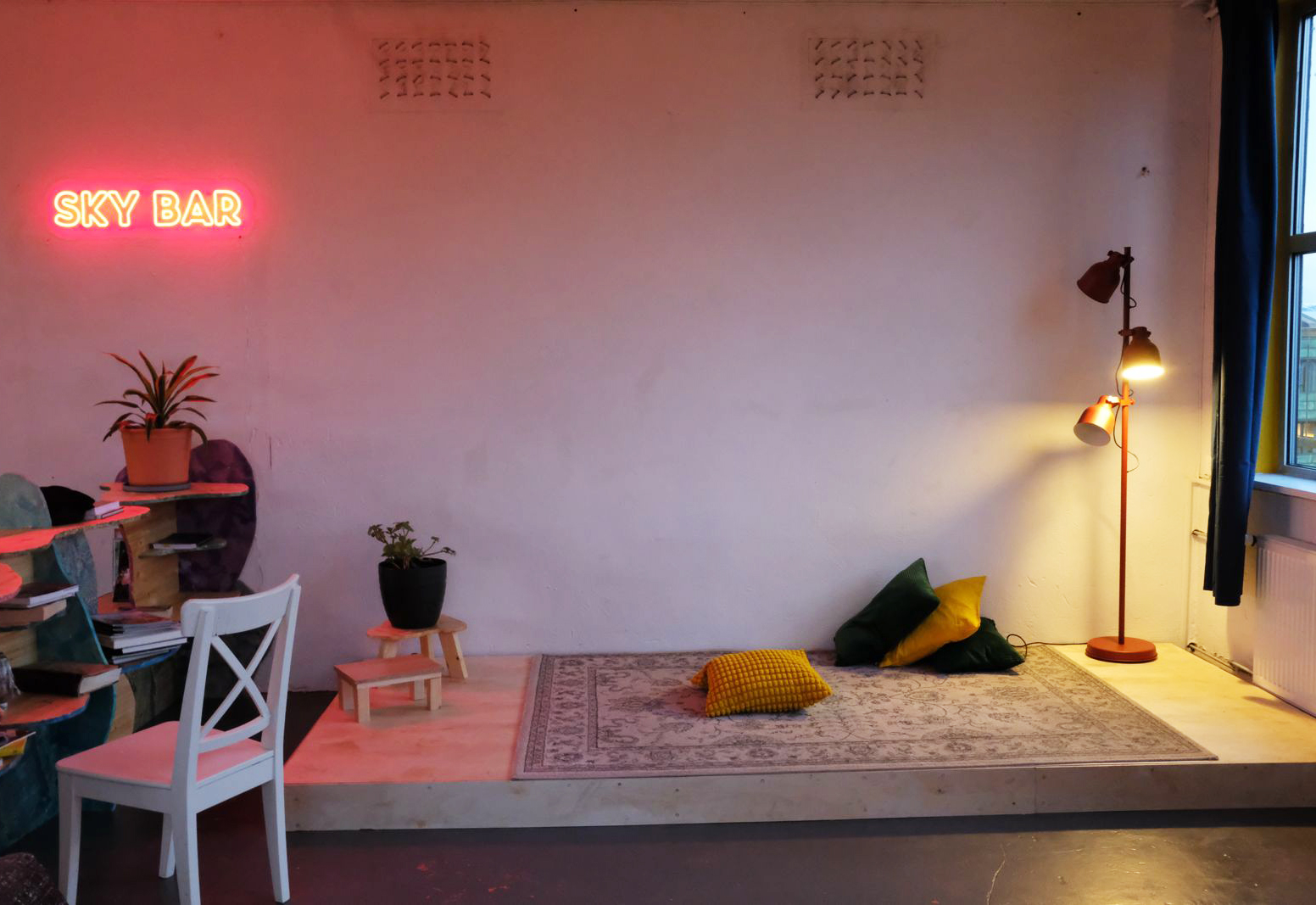
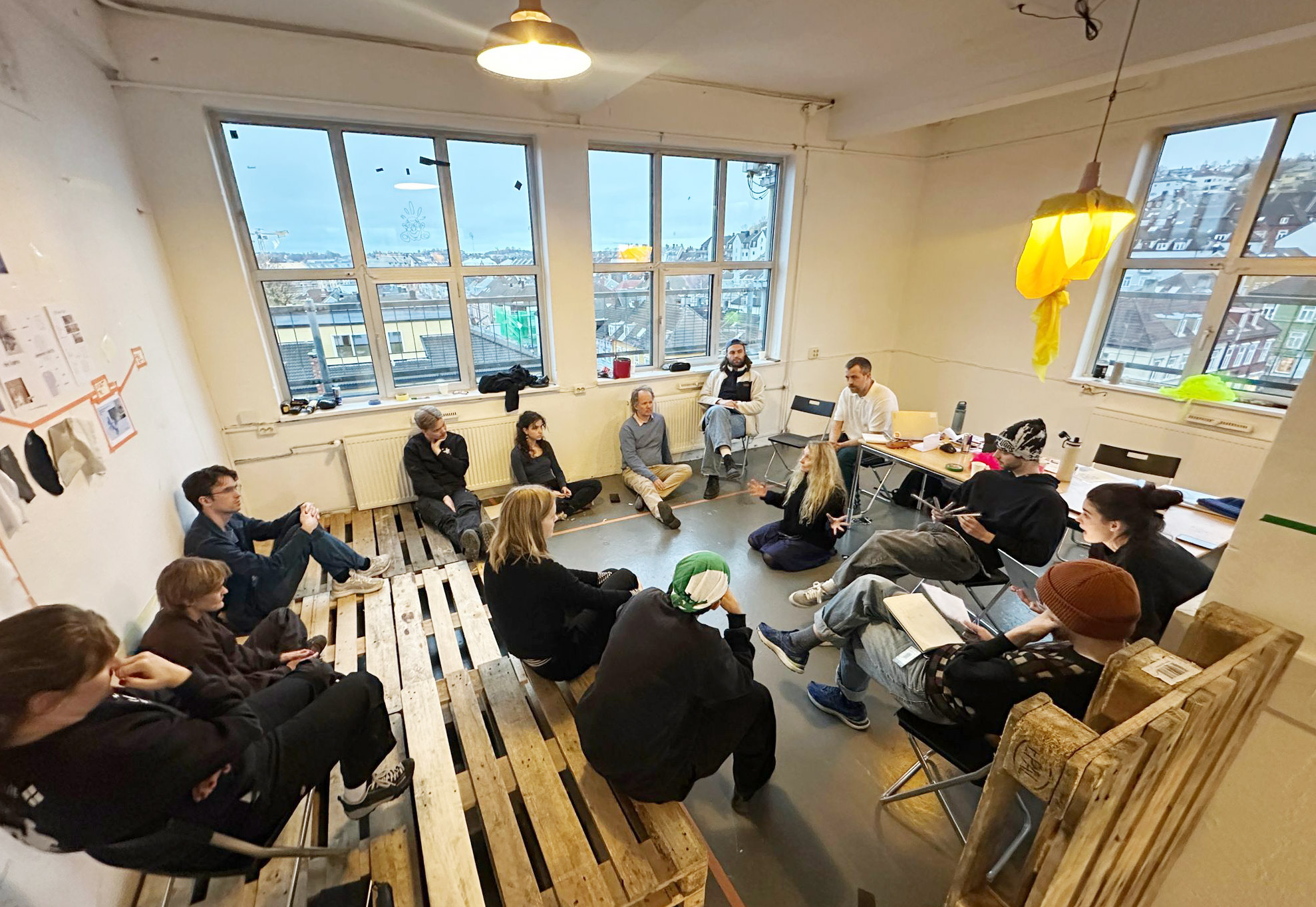
Kunst og fellesskapets rom ble etablert i 2004 av Maaretta Jaukkuri og Anne-Karin Furunes som en arena for å utforske forholdet mellom kunst, samtid og offentlige rom. Kurset hadde sin plass i et rom på hjørnet av Kunstakademiet, Kunstarken, som også fungerte som et uformelt møtested utenfor institusjonens rammer, der mat, samtale og sosialt samvær sto sentralt.
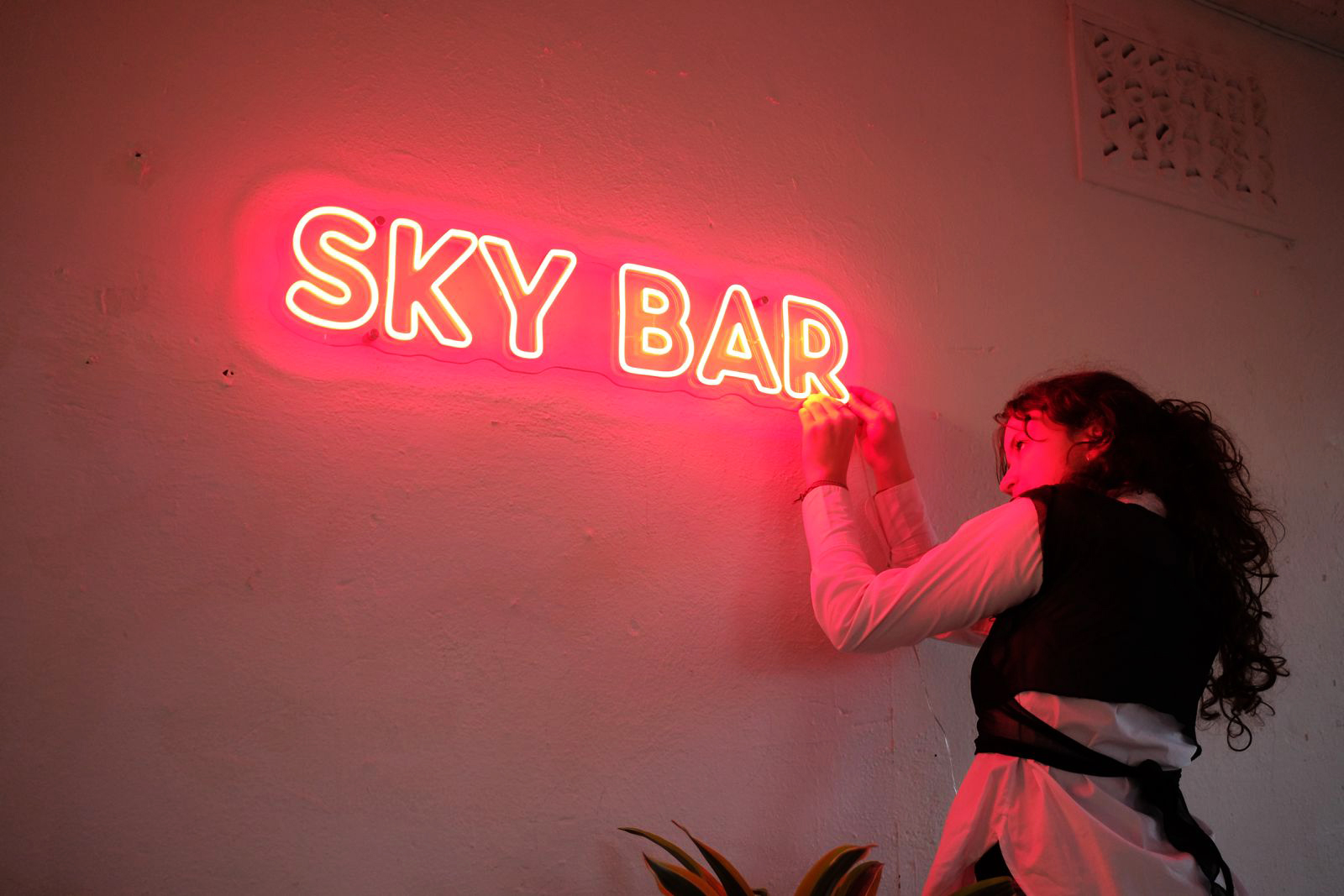
Skybar oppstod som et slikt rom allerede da Kunstakademiet flyttet inn i Stentofonbygget i 1996. I byggets øverste etasje skapte studentene et fristed – et sted for møter, matlaging, pauser og arrangementer, preget av deres eget initiativ og eierskap. Til tross for institusjonelle endringer de senere årene, der Kunstarken i større grad har blitt institusjonalisert som undervisnings og møterom, har Skybar fortsatt å fungere som et selvstyrt sosialt rom.
Workshopen tar utgangspunkt i spenningen mellom institusjonelle strukturer og studentdrevet fellesskap. Målet var å revitalisere Skybar som et sted for ro, refleksjon og uformelle møter – et pauserom der studentene kan trekke seg tilbake og gjenoppdage fellesskapet på egne premisser.
Maaretta Jaukkuri, som tidligere har samarbeidet med kunstner Egil Sæbjørnsson, inviterte ham til å lede to workshopper i regi av Kunst og fellesskapets rom. Her utviklet kunst- og arkitektstudenter ideer og løsninger i fellesskap. Arbeidet la vekt på det kollektive og det praktiske: å bygge, forhandle, teste og feile.
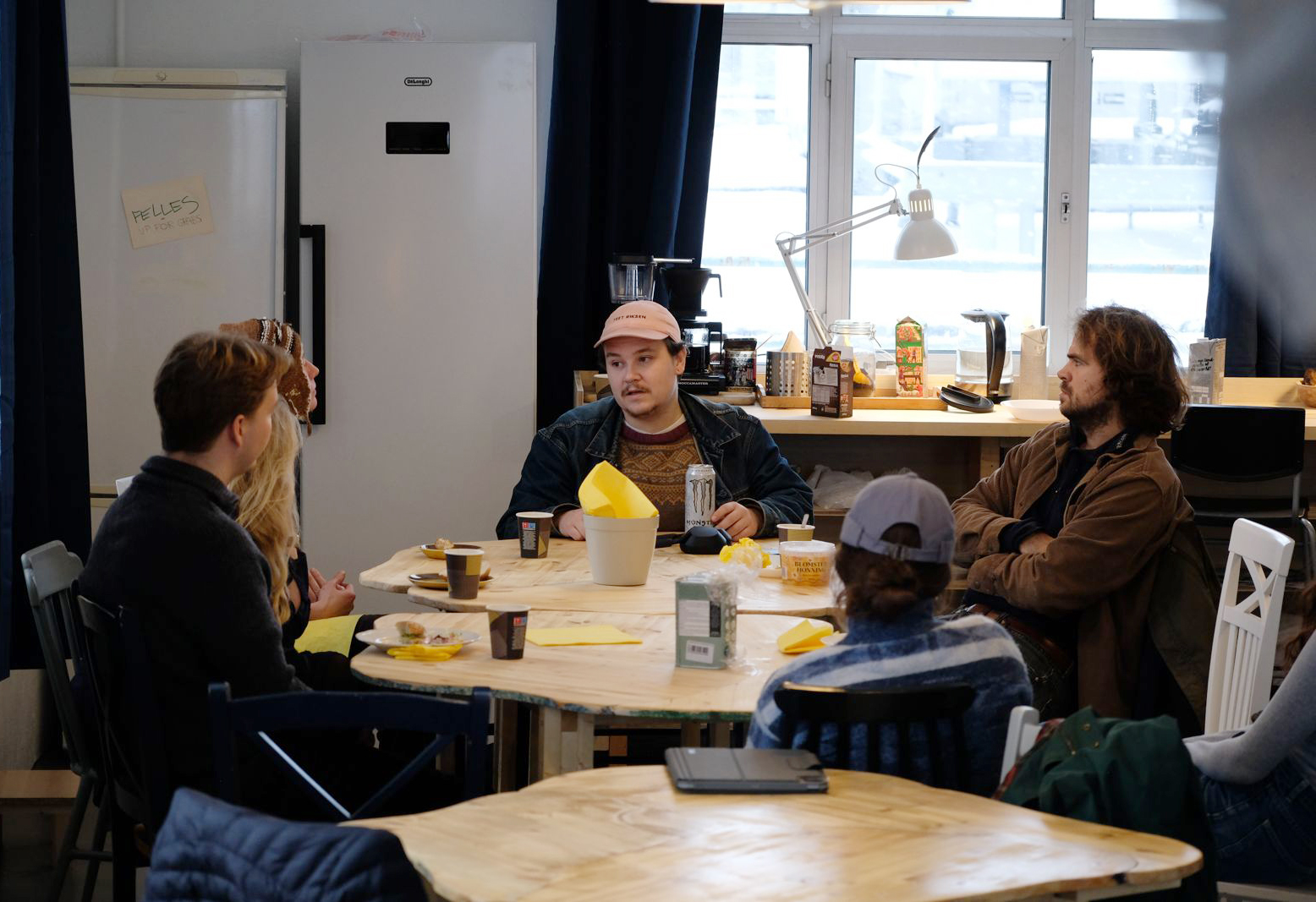
Resultatet ble et nytt kjøkken, en kjøkkenøy, seks meter lange arbeidsbenker, planter, blendingsgardiner for filmvisning, spisebord laget av gjenbrukte kunstprosjekter, en scene, et sofahjørne og en bokhylle. Samtidig synliggjorde prosessen ulike forventninger til hva et fellesrom skal være – friksjoner som i seg selv ble en viktig del av læringen om hvordan fellesskap faktisk skapes og ivaretas.
Pause space
When Alexander Eriksson Furunes invited me to contribute to the KORO project to create new spaces, led by Alexander and Thora Dolven Balke, my immediate thought was to collaborate with the students of the Art and Common Space program at Trondheim Kunstakademi. The program was started in 2004 while I was working with Anne-Karin Furunes on it.
Since Anne-Karin is still working with the program that involves students from both art and architecture at NTNU, the first step was to start collaborating with her. It was her idea to create the project in the students’ space called Sky Bar, and she arranged for it to be part of the Art and Common Space fall semester at the Academy, inviting all Academy students to participate.
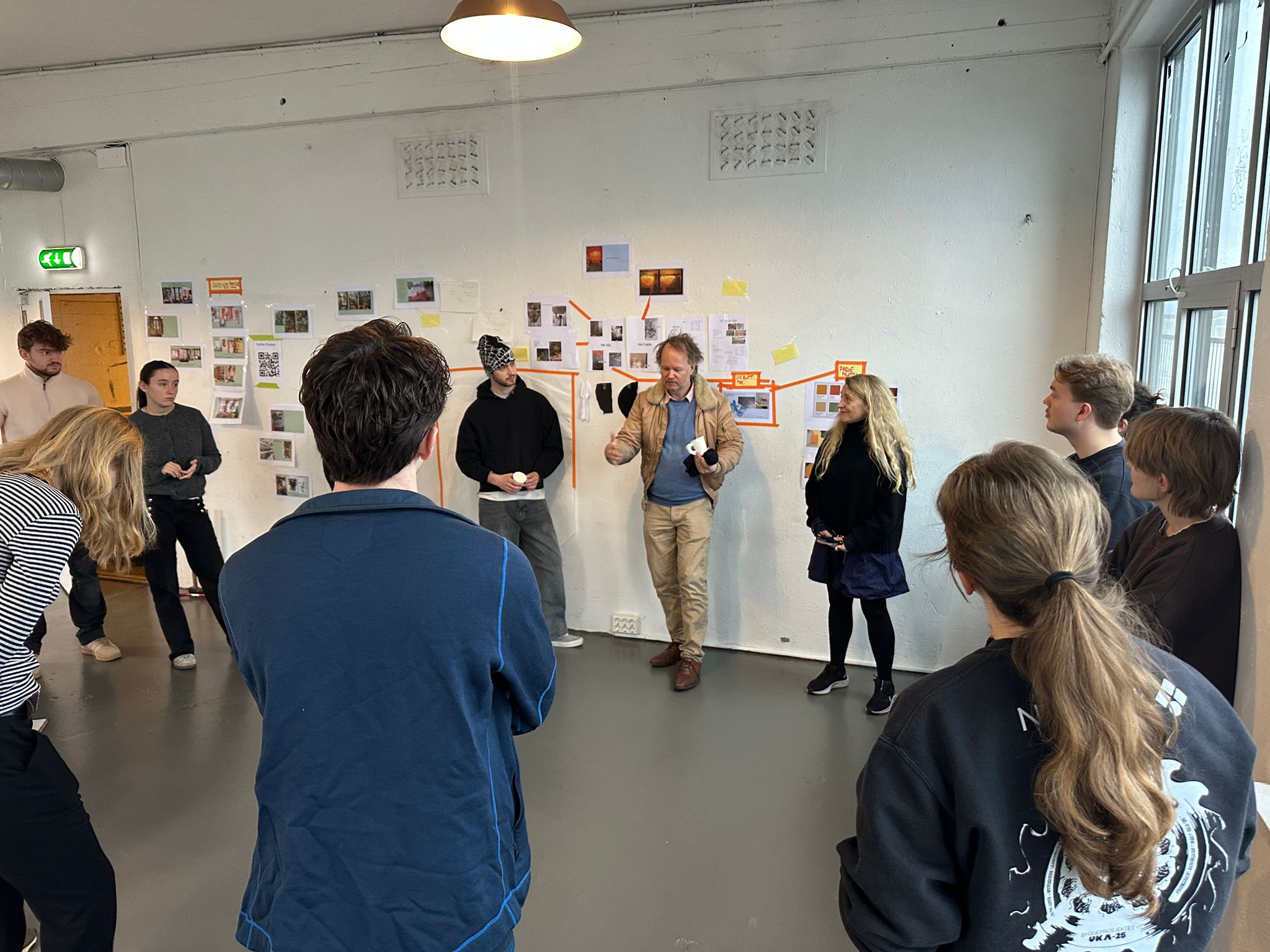
We made a schedule for the work so that we would first meet from 7. - 9.10. and the realisation period would be 10. - 13.11. We invited the Icelandic artist Egill Sæbjörnsson to join the team, knowing of his interest in architectural interventions and in creating spaces.
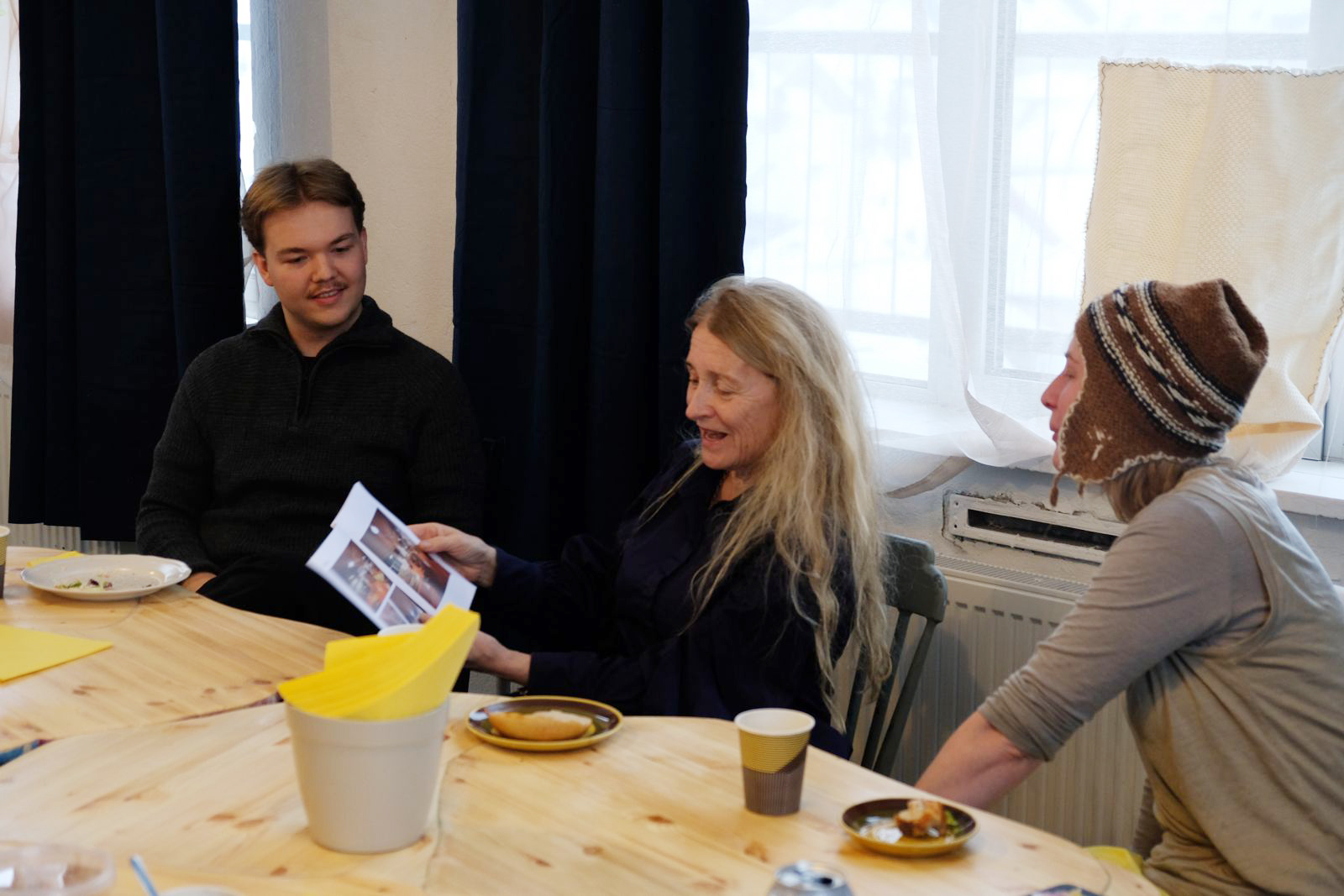
In September, we sketched a time plan for the preparations, which Anne-Karin ran through the autumn. The students were asked to present their initial plans for the Sky Bar's renewal.
We all visited the Sky Bar and could see the dire condition that it was in. The plans were presented and discussed during these meetings, but no choices were made. Some of the architecture students were on a study trip to Japan, but they still contributed their plans.
After this, the program continued during the Art and Common Space lectures. The students were shown the films “Break Room” by Laura Böök and “Open Call” by Sille Storihle. Sille was also present at the viewing and talked about her project.
During the week of realisation in November, it seemed that a group of actively involved students, both art and architecture, were well prepared to start working. Egill was actively involved in each project, giving advice and inspiring the students, while Anne-Karin worked in the background, maintaining contact with the Academy. Alexander was there as a discussion partner and to assist with acquisitions and the overall budget.
It was a miracle to observe how the students worked. No general plan was created, but they all had their team members chosen and were working seamlessly together. The schedule was hectic, but the energy was palpable. And the project was completed on time, even though it was delayed by a couple of extra working hours. The atmosphere at the opening was jubilant, even though we were all quite exhausted.
Egill wrote a text that was framed and hung on the wall, stating, “When we take care of the space, the space takes care of us.” This is to remind the students that a space needs continuous attention, and it is the duty of all students to contribute to this.
As a curator and teacher, I was genuinely impressed by the smooth running of the realisation. There was no overall plan, but the students owned the projects they wished to carry out and also made practical plans for their realisation. Alexander Eriksson Furunes made a significant contribution to the realisation. He was supporting the whole process, and during the realisation period, he was enabling and participating in the acquisitions made that week. The artist Kalle Eriksson arranged the opening serving together with some students who were not taking part in the actual building work.
Maaretta Jaukkuri