Art and Common Space was established in 2004 by Maaretta Jaukkuri and Anne-Karin Furunes as an arena for exploring the relationship between art, the contemporary and public space. The course was held in a room in the corner of the Art Academy, Kunstarken, which also functioned as an informal meeting place outside the institution, where food, conversation and socialising were central.
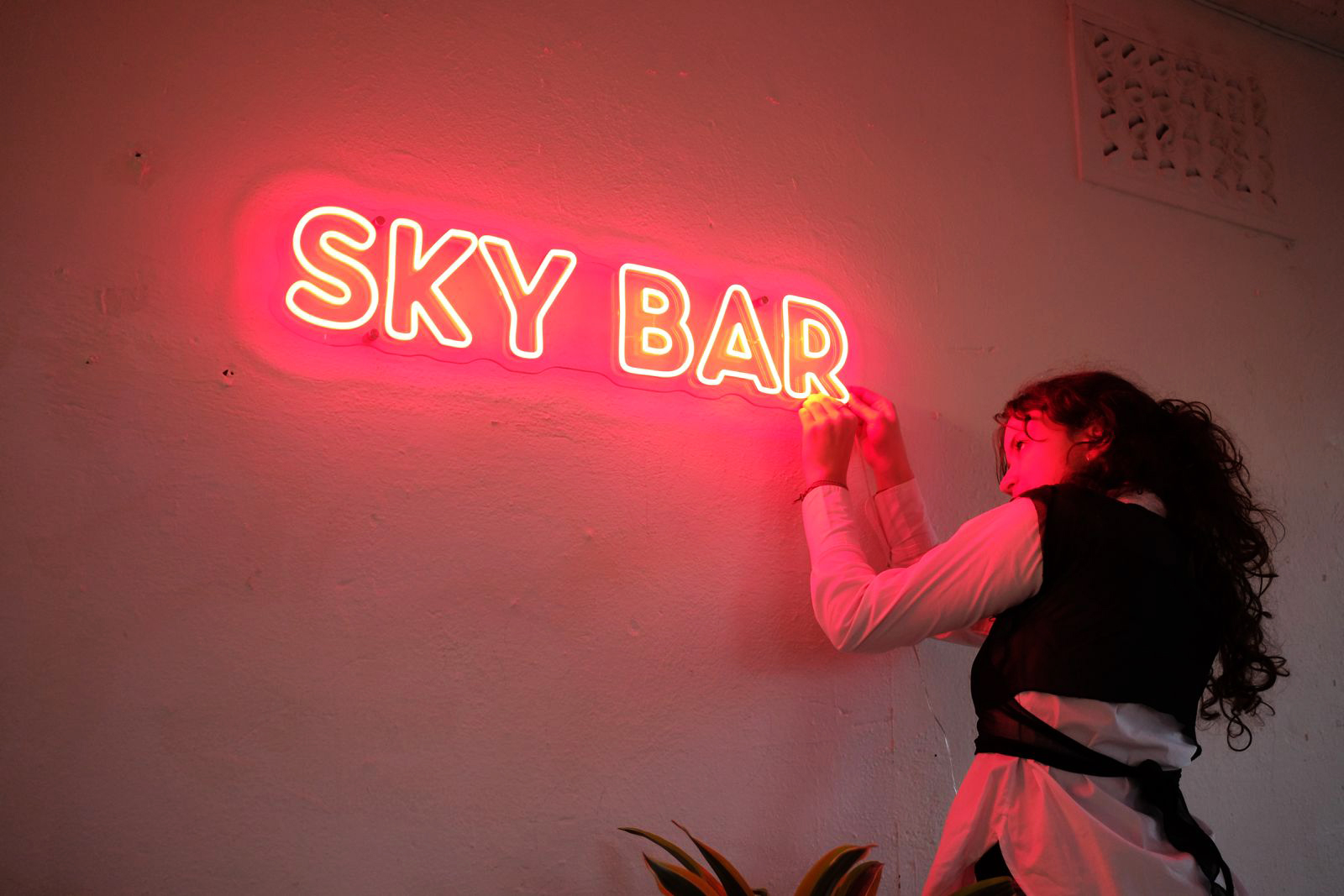
Skybar emerged as a similar space when the Art Academy moved into a new building in 1996. At the top floor, the students created a sanctuary – a place for meetings, cooking, events and breaks, characterized by their own initiative and ownership. Despite institutional changes in recent years, where Kunstarken has become more institutionalized as a teaching and meeting space, Skybar has continued to function as a self-governing social space.
The workshop takes as its starting point the tension between institutional structures and student-driven community. The goal was to revitalize Skybar as a place of pause, reflection, and informal meetings – a break room where students can retreat and rediscover community on their own terms.
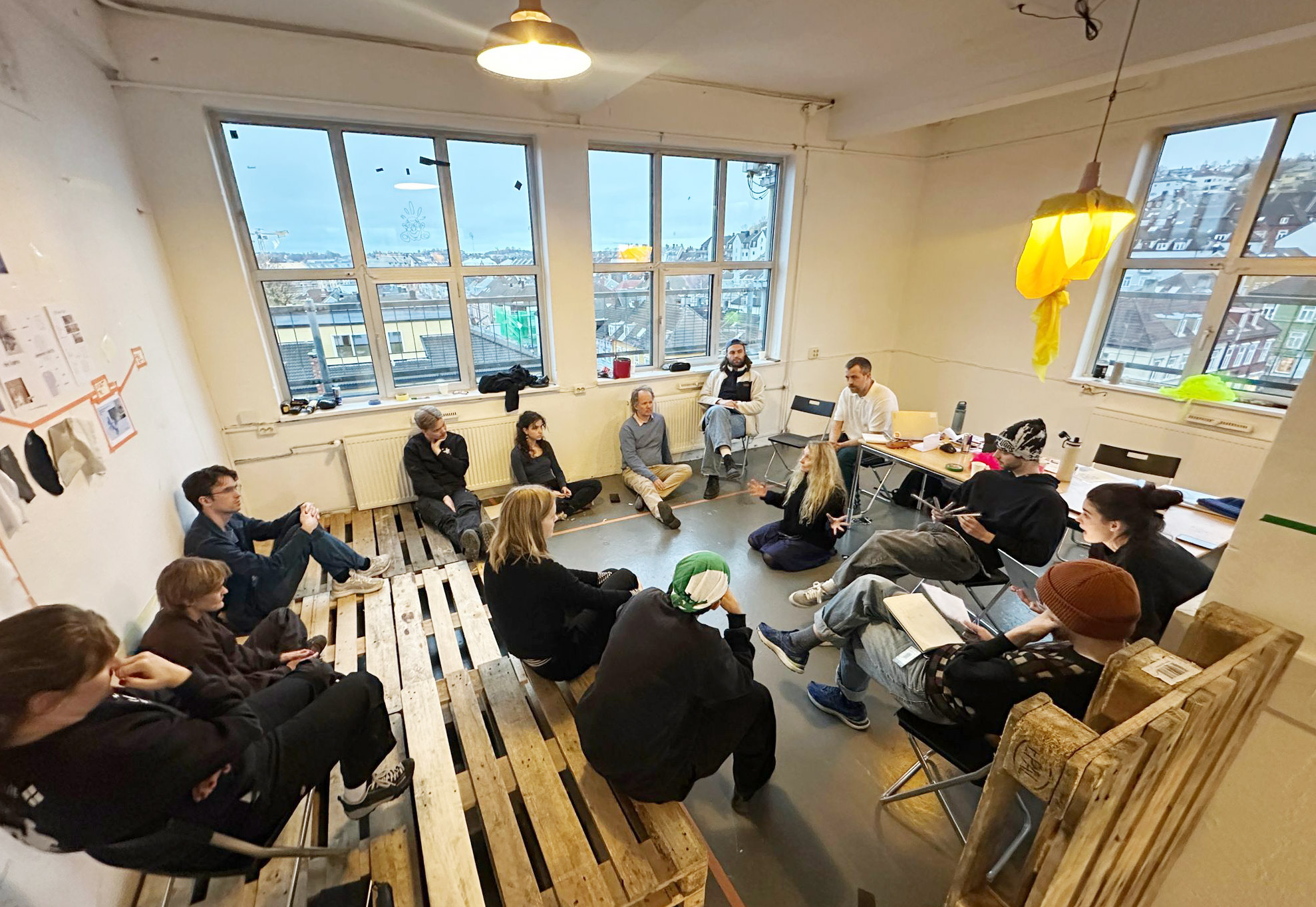
Maaretta Jaukkuri, who has previously collaborated with artist Egil Sæbjørnsson, invited him to lead two workshops for the students of Art and Common Space. In the process, art and architecture students developed ideas and found solutions together. The work emphasized the collective and the practical: to build, negotiate, test and fail.
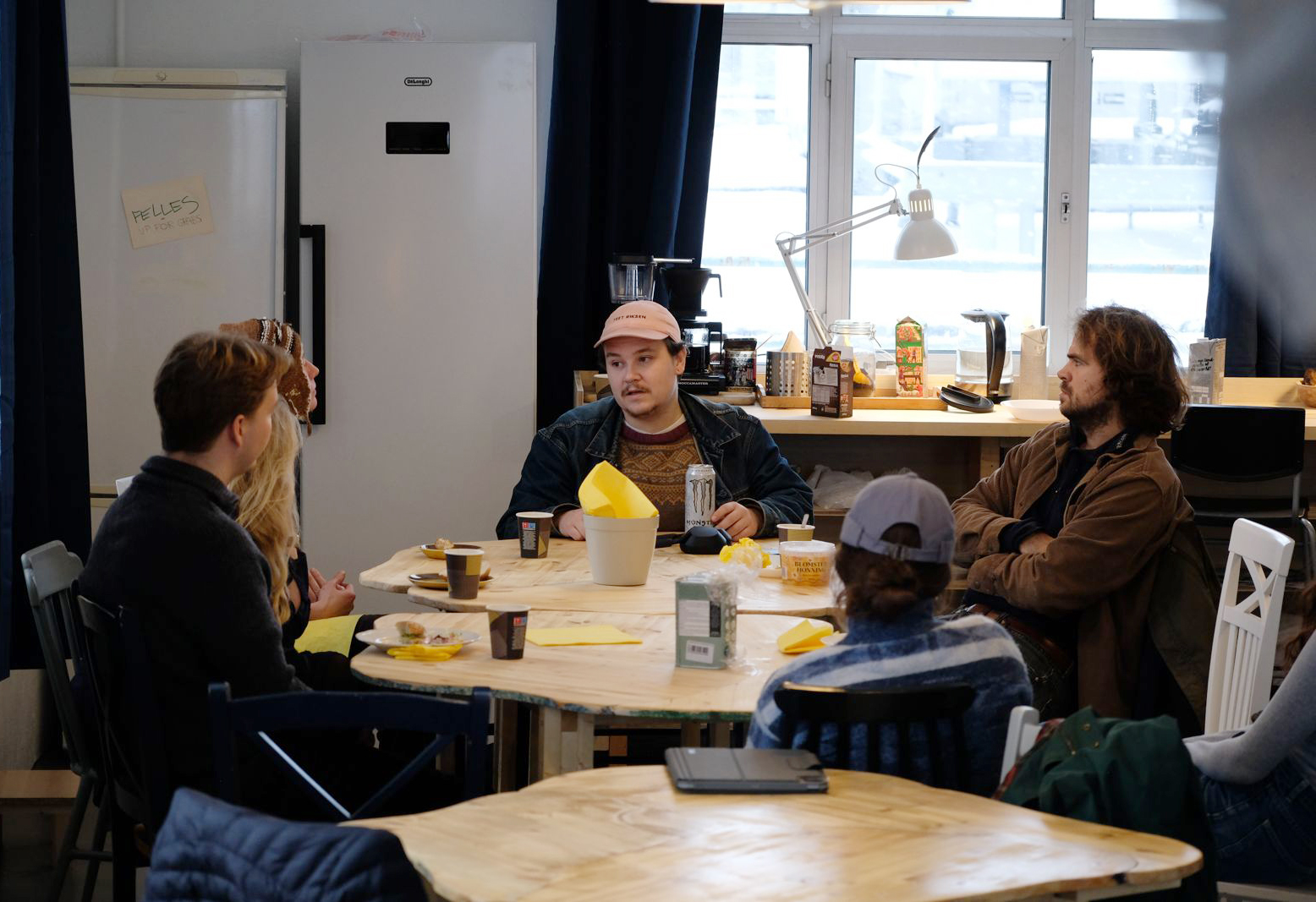
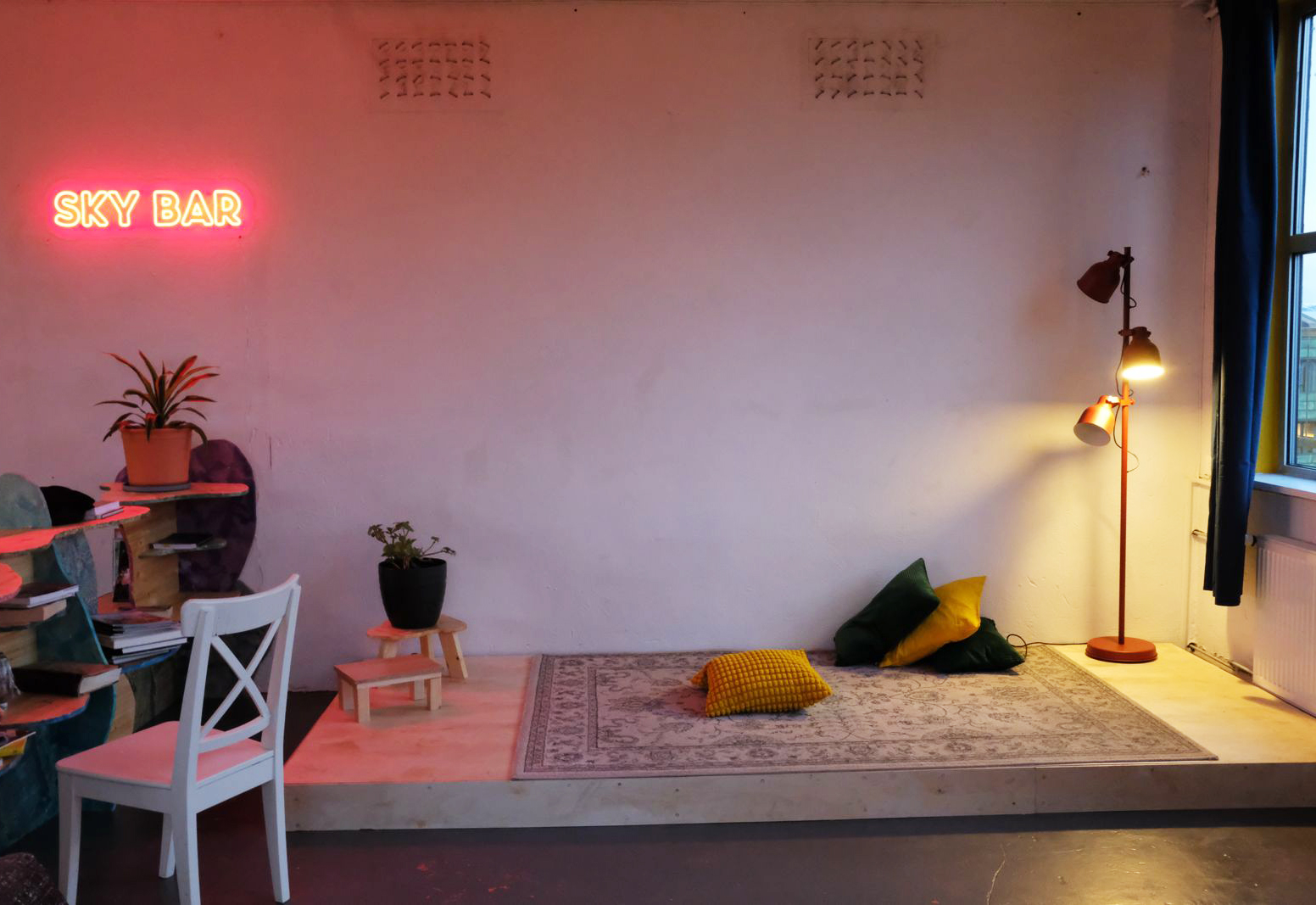
The result was a new kitchen, a kitchen island, six-meter-long workbenches, plants, blackout curtains for movie screenings, a dining table made from recycled art projects, a stage, a sofa corner, and a bookshelf. All the while, the process made visible different expectations of what a common space should be – frictions that in themselves became an important part of learning about how community is actually created and maintained.
Pause space
When Alexander Eriksson Furunes invited me to contribute to the KORO project to create new spaces, led by Alexander and Thora Dolven Balke, my immediate thought was to collaborate with the students of the Art and Common Space program at Trondheim Kunstakademi. The program was started in 2004 while I was working with Anne-Karin Furunes on it.
Since Anne-Karin is still working with the program that involves students from both art and architecture at NTNU, the first step was to start collaborating with her. It was her idea to create the project in the students’ space called Sky Bar, and she arranged for it to be part of the Art and Common Space fall semester at the Academy, inviting all Academy students to participate.
We made a schedule for the work so that we would first meet from 7. - 9.10. and the realisation period would be 10. - 13.11. We invited the Icelandic artist Egill Sæbjörnsson to join the team, knowing of his interest in architectural interventions and in creating spaces.
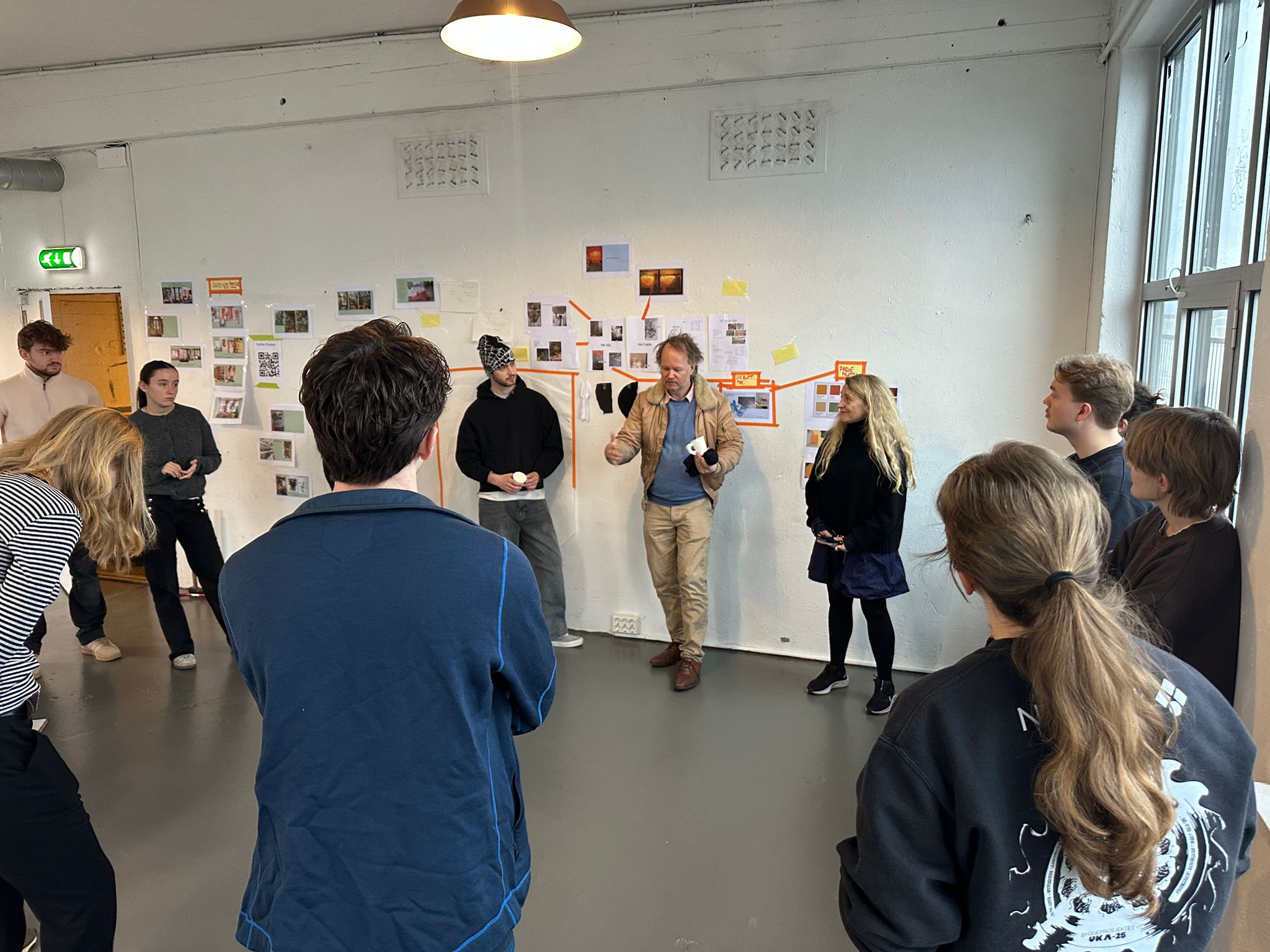
In September, we sketched a time plan for the preparations, which Anne-Karin ran through the autumn. The students were asked to present their initial plans for the Sky Bar's renewal.
We all visited the Sky Bar and could see the dire condition that it was in. The plans were presented and discussed during these meetings, but no choices were made. Some of the architecture students were on a study trip to Japan, but they still contributed their plans.
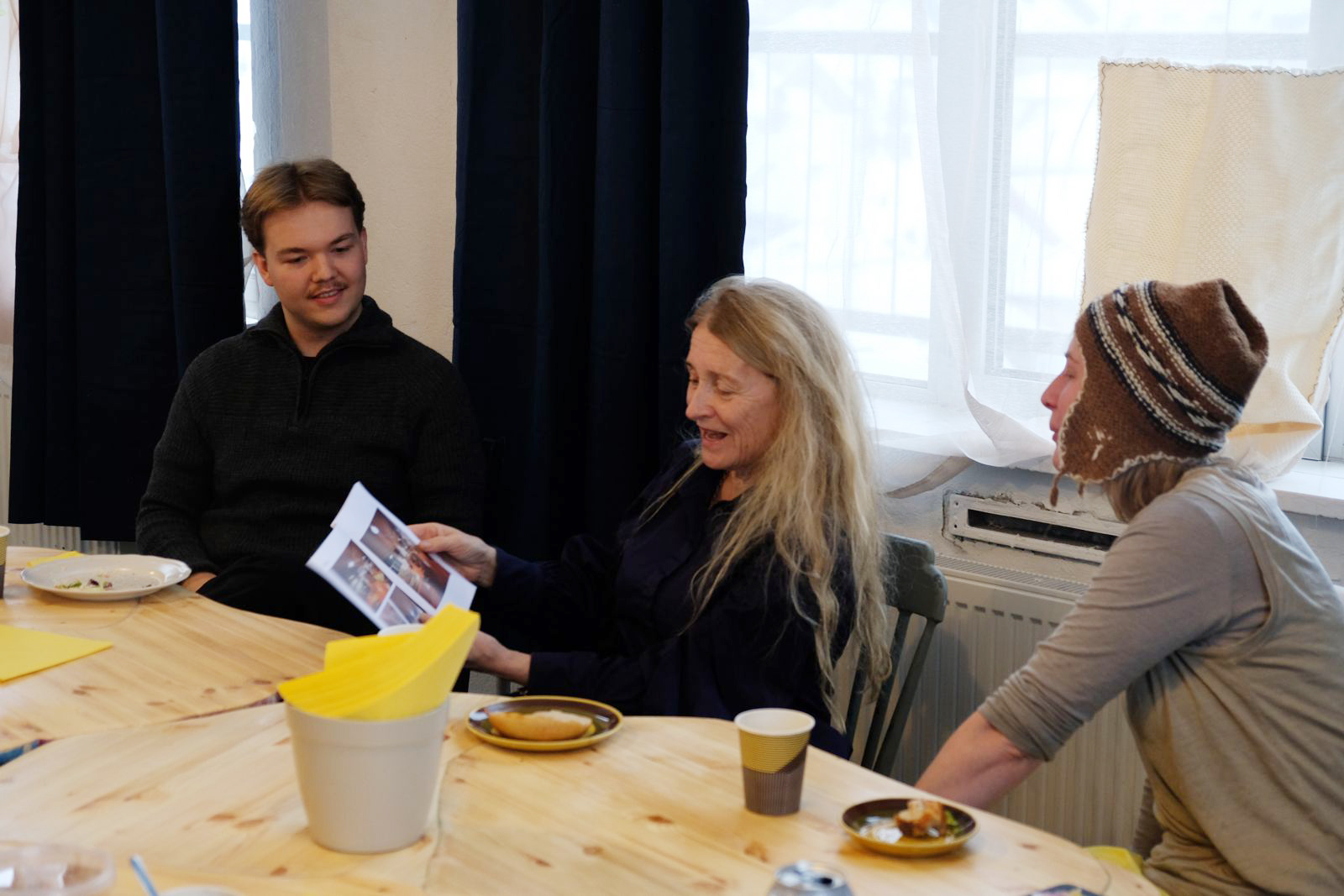
After this, the program continued during the Art and Common Space lectures. The students were shown the films “Break Room” by Laura Böök and “Open Call” by Sille Storihle. Sille was also present at the viewing and talked about her project.
During the week of realisation in November, it seemed that a group of actively involved students, both art and architecture, were well prepared to start working. Egill was actively involved in each project, giving advice and inspiring the students, while Anne-Karin worked in the background, maintaining contact with the Academy. Alexander was there as a discussion partner and to assist with acquisitions and the overall budget.
It was a miracle to observe how the students worked. No general plan was created, but they all had their team members chosen and were working seamlessly together. The schedule was hectic, but the energy was palpable. And the project was completed on time, even though it was delayed by a couple of extra working hours. The atmosphere at the opening was jubilant, even though we were all quite exhausted.
Egill wrote a text that was framed and hung on the wall, stating, “When we take care of the space, the space takes care of us.” This is to remind the students that a space needs continuous attention, and it is the duty of all students to contribute to this.
As a curator and teacher, I was genuinely impressed by the smooth running of the realisation. There was no overall plan, but the students owned the projects they wished to carry out and also made practical plans for their realisation. Alexander Eriksson Furunes made a significant contribution to the realisation. He was supporting the whole process, and during the realisation period, he was enabling and participating in the acquisitions made that week. The artist Kalle Eriksson arranged the opening serving together with some students who were not taking part in the actual building work.
Maaretta Jaukkuri